by Jodie | Feb 22, 2017 | In The Media
There is a dizzying array of types of insurance available in Australia, although the average person probably won’t be needing aircraft or defamation insurance. But like death and taxes, the majority of people won’t be able to avoid getting at least some of the basic types of insurance such as motor vehicle, house and contents and health cover.
by Jodie | Feb 17, 2017 | Business, Debt Management, Insurance & Protection, Savings
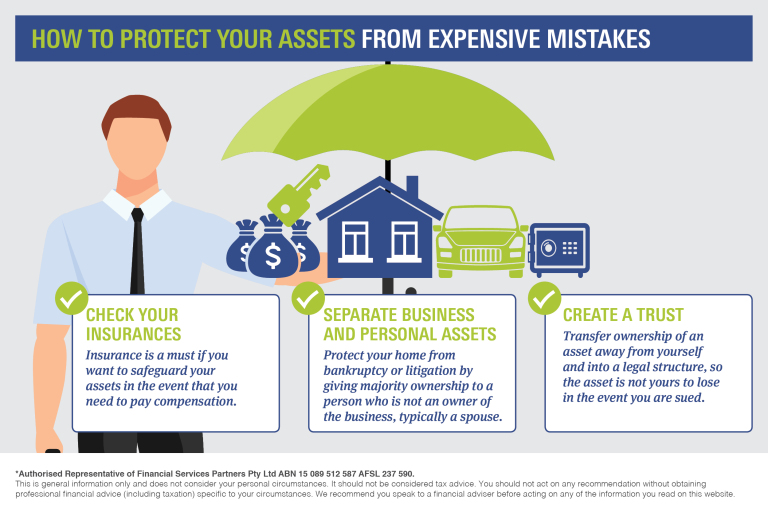
Protecting yourself from frivolous creditors and lawsuits is becoming an increasingly common concern. Here we outline some of the ways you can insulate your assets.
Check your insurances
Liability insurance is a must if you want to safeguard your assets in the event that you need to pay compensation. Lawsuits can arise for a range of reasons – from personal injury to financial loss resulting from any products or services you provide.
You can choose from three key types of cover – public liability insurance, professional indemnity insurance and product liability insurance. Seek advice from your financial adviser or insurance broker to determine which, if any, of these are suitable for you.
Separate business and personal assets
If you are a business owner and your family home is held in your name, it may be at risk from bankruptcy or litigation procedures.
One way to protect your home is to give majority ownership of the home to a person who is not an owner of the business, typically a spouse. The business owner generally retains some interest in the home, however, to ensure the asset is not dealt with without his or her authority. It is also important that the spouse does not having any dealings in the business, for example guaranteeing loans. You should also know that the trustee in bankruptcy will consider other factors to determine the bankrupt’s interest in the house and if you transfer your home to your spouse for no consideration or for less than its value, before bankruptcy, the trustee in bankruptcy can in some cases reverse the transaction.
Create a trust
Trusts can be beneficial asset protection strategies, as you are transferring ownership of an asset away from yourself and into a legal structure, so the asset is not yours to lose in the event you are sued.
Anthony Lieu, Lawyer at Legal Vision, says trusts also provide a degree of flexibility.
“Just as each family is different, each discretionary or family trust is also different. Trusts generally take their rules and operation from the trust deed, so each trust will have to abide by a different set of rules,” Lieu says.
Summary
Structuring your assets the right way is one of the most important things you can do to protect your hard-earned wealth. As these strategies can be complex, always seek the help of a qualified professional such as your financial planner, lawyer or accountant.
![Do you have a valid Will?]()
by Jodie | Feb 13, 2017 | Finances, Insurance & Protection, Investments, Money, Wealth
Creating a valid will is one of the most important things you can do to protect your loved ones. Here we explain how to go about it.

Seek legal advice
While DIY will kits can seem like an easy and inexpensive way to make a will, they can be fraught with pitfalls.
Your affairs are probably more complex than you think – your family home, business assets, super, investments and belongings. Some of things are covered by a will and some aren’t! Having a properly drawn up will helps to determine who gets what and can save your family time and stress when you are gone.
Your lawyer or financial planner will also be able to provide insights into how to best structure your will, both to protect assets and to minimise tax. Examples include setting up a testamentary trust to provide for minors or protecting your estate from creditors and making binding nominations for your superannuation funds.
Safeguard your children’s future
Probably one of the most important reasons to make a will is to ensure any dependent children are well cared for should the worst happen.
Sydney wills, probate and estate specialist, Graeme Heckenburg of Heckenberg Lawyers, says generally parents should make separate rather than joint wills, as they are likely to die at different times.
Heckenburg says a will should also appoint a guardian to take care of the day to day living and housing arrangements for the children and a trustee to execute the will and make any financial decisions. This can be one person or two different people.
“If you don’t appoint a guardian and there are young children, ultimately the decision will be made by the Guardianship Tribunal [in NSW]. If the guardianship is contested, the matter could even end up in the Supreme Court,” he says.
Keep your will updated
Once you have made a will, don’t leave it in a drawer gathering dust. Circumstances change over time change, so ensure your will reflects your current situation, particularly if your spouse has died, you have married or divorced or you have become a parent.

by Jodie | Feb 9, 2017 | Centrelink, Economy, Finances, Taxation
With many changes coming into effect this year – and more reforms being suggested – now is a great time to get your finances organised so you’re prepared.
Changes to the Age Pension
Changes to the Age Pension assets test kicked in at the beginning of January 2017.
The good news is that the threshold has been increased, so you can now own more assets before your pension is affected. But the penalty for going over the threshold has also increased. For every $1,000 of assets you have above the new threshold, your pension will be reduced by $3 – double what it used to be.
The asset test threshold varies depending on your marital status and whether you own a home, so it’s best to talk to your adviser about the changes.
The age of entitlement
A Grattan Institute report titled Age of entitlement: age-based tax breaks published in November last year suggested that making several changes to the entitlements seniors receive could save the federal government $1 billion a year.
The institute recommended winding back:
- the seniors and pensioners tax offset (SAPTO)
- the Medicare levy income threshold for seniors
- the private health insurance rebate for seniors, so they receive the same rebate as younger Australians.
The recommendations focus on retirees who have incomes at taxable levels. These may be retirees who are self‑funded or on a part Age Pension. The changes would have little effect on seniors who receive a full Age Pension. While these are only recommendations at this stage, you may benefit most from preparing early.
Stay informed and plan ahead
Staying up to date about any changes to superannuation and seniors’ entitlements – locked in or potential – may help put you one step ahead. Regularly reviewing your retirement plan to ensure it can adapt to changes is an excellent way to keep your retirement strategy resilient. Talking to a trusted financial adviser may help you achieve that peace of mind, so feel free to give us a call.

by Jodie | Jan 22, 2017 | In The Media
Only about 20% of people have a financial advisor or have sought professional financial advice, meaning at the moment, 80% have yet to see the need to visit a planner. So, do you need to see an adviser? How about I give you five good reasons why it might just be a really good idea!
1. An adviser’s job is to dig deep
They find out where you’re currently at, and what you want to achieve. They help you articulate your goals. I know, I can hear you – and sure, you can probably do it on your own. But, just putting it out there… have you? Do you know how much you need in retirement? As a lump sum? As an annual income? Do you have the best protection in place should the unexpected occur? Do you have debt that you want to get a handle on? Are your goals written down clearly with a plan of attack? We know that we are usually better off when we share our goals and have someone to be accountable to. Someone who’ll kick our butts until we achieve them. This is where a financial adviser can be invaluable!
2. An advisers’ role is all about strategy
They’re to help you make the best of your current situation, while still looking ahead for the future. Most of us have a tendency to live beyond our means and scramble those last few days before the next pay check come in. You always promise that as soon as there’s something left over, you’ll start saving, even investing! An adviser can introduce strategies like salary sacrifice, salary packaging, tax minimization, protection planning and regular investment savings plans.
3. How about you view your adviser as a coach if you’re still not convinced?
Advisers assist you to understand where you’re at, what’s ahead and be way more in control of your financial situation. You’ll be reassured that you have a plan and someone to help keep you on track. We’re the Personal Trainer of your money and you’ll be able to see clearly that you’re making gains and kicking goals at each review!
4. Mistakes are a part of life
We’ve all failed, but as we know, it’s how quickly we get up and recover that can count. Unfortunately, some of us have learned the hard way, that errors can be pretty costly. Having the option to run business and investment ideas by an expert who knows their stuff has the potential to save you thousands in expensive mistakes!
5. Most advisers also understand protection
A brilliant financial plan is useless if something from left field takes you out and all that you’ve worked so hard for isn’t protected. True peace of mind comes from ensuring that your own health, ability to earn and income and your loved ones or even key people in your business are taken care of in event of traumatic illnesses, disablement or even fatal situations.
Hopefully these five reasons are compelling enough for you to think again about whether or not you really need an adviser. These days, we’re time poor. We’re already juggling our career, business, employees, health and wellbeing, significant other, little people and besties, while trying to stay on the green smoothies, pack a nutritious lunch, fit in yoga and not forget the school run and nail eight hours sleep each night.
There’s not much time left over and being someone who’s all for outsourcing… why not allow a professional to assist? Unless you’re all over your financial situation, have set plans that you’re working to achieve and truly have it all together, I believe a financial adviser can add value, and possibly point out areas where you hadn’t even thought you might need a hand.
Usually an initial interview is at the adviser’s expense of time, so look around, interview a couple and find someone you click with who can make your life easier today! It may just be the best investment you ever make.
VISIT WEBSITE