by Jodie | Nov 7, 2012 | In The Media, Insurance & Protection
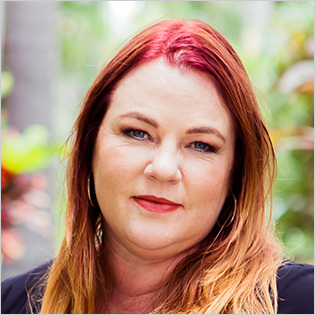
This is the real-life story of Dani, as told by her financial adviser Amanada Cassar of Wealth Planning Partners
Dani is the daughter of a client I’ve had for some time. Her mum Jessie approached me to assist with some Salary Packaging strategies as she’s a nurse, and we soon became friends. Jessie is a happy, friendly, hospitable woman and extremely proud of her two beautiful daughters. She also happens to share her name with my great-grandmother – so we now consider each other as family.
On finding out her youngest had been diagnosed with leukaemia at age 22, she was distraught, but went straight into protection, carer and nurture mode – it seems to come especially easy to her as both a mother and a nurse!
Jessie also requested that I go through some of Dani’s paperwork to see if there was anything financially she had that could help out. Included in that bundle was a statement of superannuation benefits for an industry fund which included lump sum cover for Death and Total & Permanent Disability (TPD). Dani’s prognosis was grim for the immediate future and likely the coming 3-5 years or beyond, meaning a possible total disablement claim. In any case, it wouldn’t hurt to try.
I assisted Dani when she was feeling up to it, to complete the paperwork, liaise with her doctors, the hospital and submit the paperwork, all within a couple of weeks of the insurance lapsing due to the fact that she’d now left work and no further employer funds were being paid.
And that’s possibly when the true battle began. Dani’s health was up and down; eventually reducing to 32 kgs; falling and breaking her tailbone; being accidentally overdosed by the hospital along with the usual treatments for her condition. Tests eventually confirmed Dani had beaten the leukaemia but had a serious complication following the marrow transplant known as GVHD (Graft vs. Host Disease) where the immune cells in the graft recognise the recipient as a foreign host and attack the hosts’ body cells.
The doctors also were slow to respond to the paperwork requirements and unwilling to complete the relevant pages requested by the insurance company to confirm TPD and finally and sadly, we had to switch to a Terminal Illness claim when Dani was told she had less than 12 months to live. Hundreds of pages of reports followed and after much frustration and work over fourteen months, the Case Manager finally rang to advise me we had a payout on the way!
Dani has put on a couple of kilograms, is still in hospital but remains incredibly positive and was delighted to turn 24 a few months ago. I’ve been asked to assist her to find a new home, close to hospital and where she can concentrate on recuperating as best she can and devote more time the creative arts she loves.
This story reinforces strongly for me the immense value of insurance, the importance of advice and the significance of the precious relationships we forge along the way
Being financially independent now provides Dani with options – she can concentrate on her health and wellbeing, provide medically for her needs and allows her some financial freedom.
Visit Website
![Finding Parity for Women's Super]()
by Jodie | Oct 26, 2012 | Advisers, Business, Finances, General, Investments, Superannuation, Women
 Well, I do love to travel and really enjoyed heading to fabulous Melbourne for the Women in Finance Vic (WIF) Lunch recently. I don’t need much arm twisting to get me to Victoria and was glad to combine some appointments with clients and colleagues with a great lunch.
WIF had combined forces with the Australian Centre for Financial Studies and the Financial Services Institute of Australia (FINSIA) to put on a great lunch in Collins Street to discuss “Finding Parity for Women’s Super.”
A great panel of women leaders representing the Industries of consumer and wealth management sectors discussed:
- Why the Value of women’s super is so much lower than men’s
- Why some women don’t have super and don’t focus on it
- What various sectors of the industry are doing about it; and
- What is and isn’t working
Some of the history of discriminatory superannuation measures against women were highlighted, including the Married Women’s Fund, available for the Public Sector; along with limited or no access to superannuation benefits for working women and the exclusion of super being mandatory for those earning under $450 per month from certain employers.
As 75-80% of Australians currently access the Age Pension (of approx. $20k p/a) self-funding for retirement is becoming of increasing importance to all.
Not surprisingly, it was highlighted that women often have multiple or many employers, especially for casual work, and an erratic working life, due to pregnancy, child birth and motherhood. Women also have a longer life expectancy than men, and need to fund for retirement longer. On average, the girls currently have around 17% less than men in their Super funds, but require around 13% more.
Women are perhaps more disengaged with their funds feeling superannuation saving is for the future, not really important, that their family situation will take care of things or that most Advisers are men, and they aren’t really sure about trusting them with their small and unimportant nest eggs.
Anne-Marie Corboy, CEO of HESTA, a large industry fund highlighted that the average balance across their 750,000 members is $29 886 for men, and a bit over $26k for women. Hardly enough to set up for a comfortable retirement, for anyone!
So, what can be done?
Some of the suggestions included constantly consolidating superannuation accounts whenever changing employer, not to ‘lose’ any super funds, make the most of incentives such as the Co-Contribution and Spouse Superannuation schemes and taking a lot more interest and control over your own financial journey.
As one of the Advisers put it, ‘A Man Is Not a Financial Plan!’ So girls, time to engage more with what is yours and ensure every penny is accounted for. And if you need help, I’d love to give it! Please call on the mobile 0410 455 158 if you’d like a hand on how to get started.
![Finding Parity for Women's Super]()
by Jodie | Oct 9, 2012 | Advisers, Debt Management, Finances, Insurance & Protection
 If faced with a brush with death, many consumers would sooner jump on the next plane to a sun-kissed getaway than contemplate getting life insurance, according to research commissioned by CommInsure. Not that it doesn’t sound appealling, I guess. But then, I’ve got all my personal insurances sorted.
Tim Browne, General Manager Retail Advice at CommInsure, recently revealed that large challenges remain for insurers when it comes to the priorities of their potential customer base.
“We have been working to convince the broader community that insurance is something which is important and worthwhile,” Browne told the conference delegates.
“In the last couple of years we have spent a great deal of energy working with the government, regulators and the media to help them understand how important insurance is. Our big challenge now is to further our efforts by focusing on consumers.
Browne stated that their research into consumer views of insurance revealed both “rational and surprising responses”.
“When we asked consumers how they would respond to a brush with death, more than half of them said their first reaction would be to fly overseas and recuperate! The response we want to hear is that in the event of something like that happening, they would sit down and carefully contemplate their insurance and take proactive action to ensure their financial details are covered. However, most people think of the Greek Islands instead! We need to change that,” said Browne.
What I believe is even trickier to help consumers understand is to take out the cover while you’re still healthy. Once you’ve had the scare, or the brush with death or that twitch in your eye that just won’t go away – you’re much more likely to be hit with higher premiums for some cover, or exclusions for others.
The process to reverse this trend is pressing home that people need to contemplate how they or their family, would survive in the event of job loss, serious illnesses or injuries or worst case, a death in the family.
“Consumers often feel that they will just have to dip into their savings, but that is only going to look after things for a short amount of time,” added Browne. Added to that, with most families living week to week, there’s not always a lot of savings on hand.
“Consumers next fall back is to rely on the government and social security, but no government in the world can tailor a safety net to meet everybody’s individual circumstances. This leads us down the path of why insurance is so important.”
Source: insurancenews.com.au article – Clients Pick Holidays Over Insurance – 24/5/2012

by Jodie | Oct 4, 2012 | Business, Debt Management, Economy, Finances, Interest Rates, Superannuation, Taxation
 So the RBA have dropped the official cash rate down to 3.25% at the October Board meeting. Xmas in October then? Or once again, too little – too late? How does our Resource Story and China fit in with all this?
Read the Macquarie Investment Management take on the likely impact of the cut and future economic outlook it was based on, here: Macquarie RBA Oct12 Cut
![Finding Parity for Women's Super]()
by Jodie | Sep 4, 2012 | Advisers, Business, General
 Wealth Planning Partners are pleased to announce that Amanda Cassar has been nominated for the Female Excellence in Advice Awards for 2012. Amanda was also nominated in the inaugural launch year of the awards in 2011.
There is a high need for quality female advisers in the financial planning industry who are able to help influence the standards and direction of this great profession.
For more information please read through the attached press release here: TAL FEAA 2012 Press Release
![Finding Parity for Women's Super]()
by Jodie | Jul 31, 2012 | Business, Economy, Finances, General, Investments
Cick here for :  Russell Investments Market Commentary July 2012
Please find attached a copy of the latest Russell Market Outlook for July 2012.
Key messages include:
§ Markets to remain unsettled until there is a strong policy response in Europe.
§ U.S. economy on track for moderate growth. Risk of recession is low.
§ China’s economy is slowing but not collapsing.
§ Shares are cheap and bonds are expensive, but risk-on/risk-off cycle to persist for a while longer.
§ Tilt against the AUD in Russell Diversified Funds increased from low to medium.
I hope you find this of interest. If you have any queries please don’t hesitate to give me a call.
by Jodie | Jul 29, 2012 | Advisers, Finances, General, Insurance & Protection, Superannuation, Women
Dani is the daughter of a client I’ve had for some time. Her mum Jessie approached me to assist with some Salary Packaging strategies as she’s a nurse, and we soon became friends. Jessie is a happy, friendly, hospitable woman and extremely proud of her two beautiful daughters. She also happens to share her name with my great-grandmother – so we now consider each other as family.
On finding out her youngest had been diagnosed with leukaemia at age 22, she was distraught, but went straight into protection, carer and nurture mode – it seems to come especially easy to her as both a mother and a nurse!
Jessie also requested that I go through some of Dani’s paperwork to see if there was anything financially she had that could help out. Included in that bundle was a statement of superannuation benefits for an industry fund which included lump sum cover for Death and Total & Permanent Disability (TPD). Dani’s prognosis was grim for the immediate future and likely the coming 3-5 years or beyond, meaning a possible total disablement claim. In any case, it wouldn’t hurt to try.
I assisted Dani when she was feeling up to it, to complete the paperwork, liaise with her doctors, the hospital and submit the paperwork, all within a couple of weeks of the insurance lapsing due to the fact that she’d now left work and no further employer funds were being paid.
And that’s possibly when the true battle began. Dani’s health was up and down; eventually reducing to 32 kgs; falling and breaking her tailbone; being accidentally overdosed by the hospital along with the usual treatments for her condition. Tests eventually confirmed Dani had beaten the leukaemia but had a serious complication following the marrow transplant known as GVHD (Graft vs. Host Disease) where the immune cells in the graft recognise the recipient as a foreign host and attack the hosts’ body cells.
The doctors also were slow to respond to the paperwork requirements and unwilling to complete the relevant pages requested by the insurance company to confirm TPD and finally and sadly, we had to switch to a Terminal Illness claim when Dani was told she had less than 12 months to live. Hundreds of pages of reports followed and after much frustration and work over fourteen months, the Case Manager finally rang to advise me we had a payout on the way!
Dani has put on a couple of kilograms, is still in hospital but remains incredibly positive and was delighted to turn 24 a few months ago. I’ve been asked to assist her to find a new home, close to hospital and where she can concentrate on recuperating as best she can and devote more time the creative arts she loves.
This story reinforces strongly for me the immense value of insurance, the importance of advice and the significance of the precious relationships we forge along the way. Being financially independent now provides Dani with options – she can concentrate on her health and wellbeing, provide medically for her needs and allows her some financial freedom to consider her options.
Handwritten thank you note from Dani read:
Dearest Amanda
I just wanted to say thank you for all the support you have given to me over the past 2 years. Thank you so much for chasing up that money from Sunsuper, for being persistant and dedicated in your work. For always being friendly and a pleasure to be around. For being a great and loyal and supportive friend to my mum and for taking time out of your busy schedule to make time for us. We both love you to death and yo really do have such a positive influence over mum. I notice she always seems so much happier and relaxed after she sees you.
Thank you for everything. Take care of yourself. Looking forward to catching up.
Always, Dani x
by Jodie | Jul 11, 2012 | Advisers, Australian Economy, Economy, Finances, General, Insurance & Protection
 Most of us who are parents, know that bumps and bruises are just all part of being a kid and growing up. Sadly however, many Aussie kids suffer from medical conditions and accidents that are far more serious.
I personally have a niece with heart problems and an autistic nephew, so know all too well how health concerns can affect a family both financially and emotionally.
What many don’t know is that there is an insurance solution that can be tailored into the family’s protection package that can cover some of the major concerns your children could face.
Children’s trauma insurance offers coverage for a wide range of illnesses (including meningitis, cancers, blood disorders, loss of sight, major organ and bone diseases) and some serious accidents and death.
Many insurers now offer Child Trauma Insurance. It is usually an optional extra to an adult’s life or trauma cover and typically covers children aged between ages 2 and 15. Coverage is typically for a lower amount, and the premiums are much lower than adult trauma insurance too (as an example, from $1 p/month per $10k of cover.)
When a child is seriously ill or injured, parents often take on the role of carer. This can reduce family’s income at a time when additional money is required for the medical care of the child. Child trauma insurance may just buy you some additional time, ease some of the financial burden and takes the future into account.
If you’d like to know more about how this cover can assist your family, please don’t hesitate to give our Advisers a call on 07 5593 6895 – or drop us an email and we’ll be in touch.
![Finding Parity for Women's Super]()
by Jodie | Jul 11, 2012 | Advisers, Australian Economy, Business, Economy, Finances, General, Insurance & Protection, Superannuation
 Wealth Planning Partners are pleased to announce that Russell Sheasby has joined our team of Gold Coast based Financial Advisers.
Russell emigrated from South Africa 10 years ago and has been both self employed in small business and employed in management roles of various national companies since that time.
Having had daily contact with clients, contractors and SME’s and first hand experience with building business, Russell will make a great addition to the team.
Russell is looking forward to tailoring plans that will individually suit our clients and will help to assist in achieving your wealth creation goals and protection needs.
Please visit Russell’s LinkedIn profile for more information:
http://au.linkedin.com/in/russellsheasby
by Jodie | Jun 21, 2012 | Business, Economy, Finances, Superannuation, Taxation
Superannuation payments are set to rise for employers phasing up from 9 to 12% over the coming years. Employers are expected to be paying the full 12% by 2020.
Basically, this measure is designed by the Government to increase the future retirement savings and incomes of Australian workers through a gradual increase in the superannuation guarantee.
Most of us realise that the Government can’t afford to fund pensions forever, and we all need to take a more active role in saving for our retirement. And most of us understand that employers are the ones who will be funding the bulk, if not all of the increase.
The Government has released the following Fact Sheet with detailed explanations: http://www.deewr.gov.au/Department/Documents/Files/6_Fact_Sheet_SG%20_rate_increase.pdf
It all seems fairly straight forward to myself, my employees and most of the employers and clients I speak with. Even the DJ’s at 2GB seem to have a pretty good handle on how it’ll work.
Not so for the Labor member for the seat of Canberra – Gai Brodtmann it would appear.
In this interview, she attempts to explain who’s going to pay for the 3% increase in the Superannuation levy. Presumably this is an interview she has prepared for and a law she has quite possibly, voted on.
The political ‘spin’ is perfect (if repetitive) but it appears, she hasn’t a clue about what it means or how it all works.
Unfortunately, as amusing as the following interview is, it’s also serious. Our Politicians are the lawmakers – and one would hope they have some idea of what they’re doing.
http://www.2gb.com/index2.php?option=com_newsmanager&task=view&id=12080&task=view&id=12080